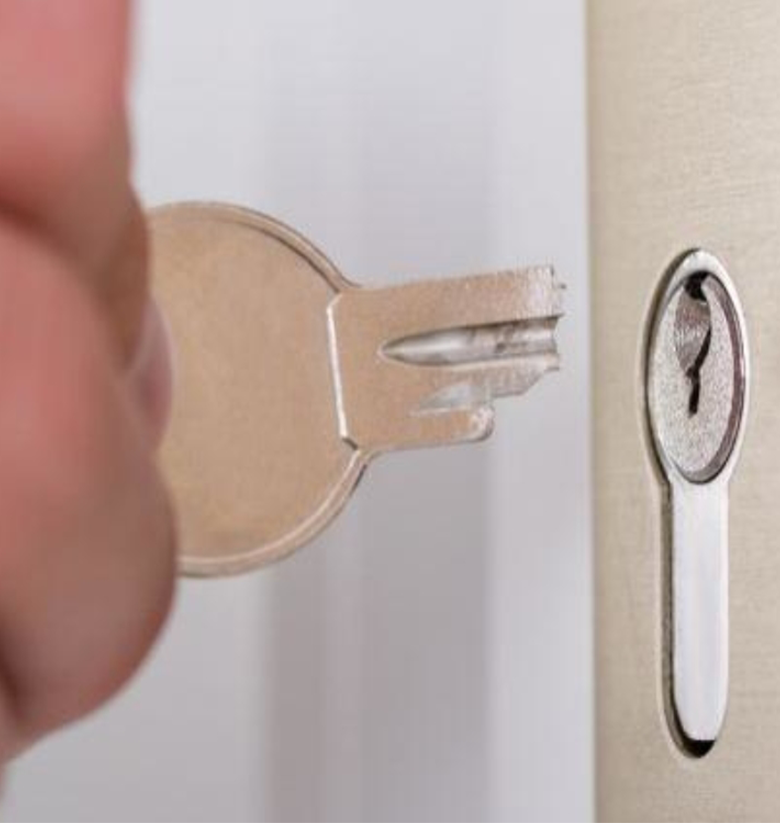
Key snapped off in the lock? Our locksmiths carefully remove broken keys without damaging the lock, so you’re not left paying for a full replacement over a simple mishap.
A key snapping off feels like a bigger problem than it usually is. We carefully remove the broken piece using precision tools, so your existing lock keeps working and you’re not paying for something you didn’t need.
A snapped key is annoying enough, so we get there fast and start removing it as soon as we arrive.
In most cases your lock doesn’t need replacing at all, just the broken key removed carefully.
Every technician confirms their identity first, so you can trust exactly who’s working on your lock.
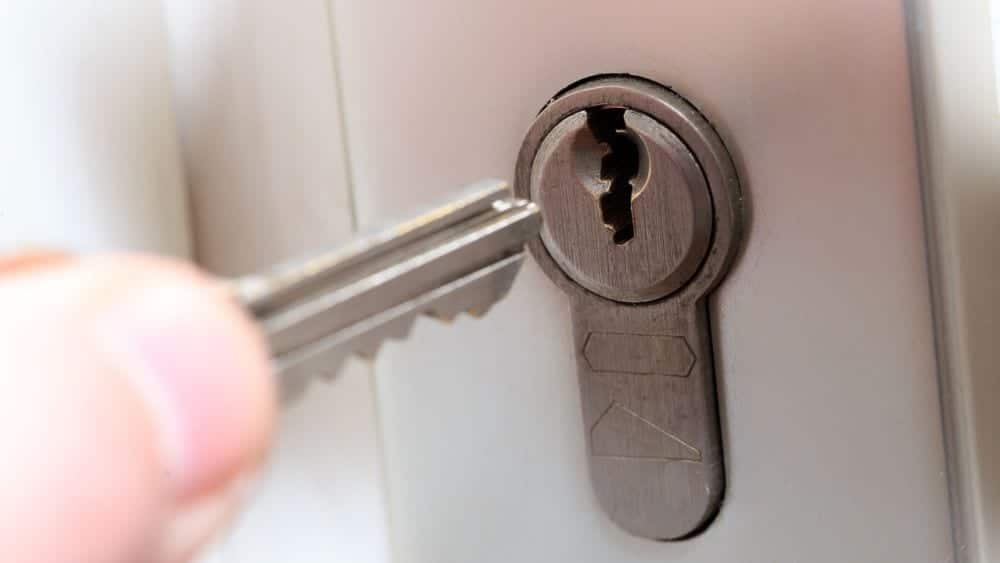
Keys used for years can gradually weaken and eventually snap off inside the lock without warning. This is one of the most frequent issues we see across all property types. We remove the broken piece carefully without harming the lock. Keys carried loosely in bags or pockets are especially prone to this.

Trying to force a stiff key can cause it to bend or snap, especially when someone’s in a rush. This often happens during busy mornings or when running late. We extract the broken key using proper precision tools. This type of call is common at peak times of day.

Metal keys can become more brittle in colder weather, making them slightly more likely to break. This pattern shows up more during Boronia’s cooler months. We remove broken keys safely no matter the season. Long-time customers know this trend well.

Cheaply cut duplicate keys are far more likely to snap than an original manufacturer key. This often happens with spare copies made quickly at low-cost kiosks. We remove the broken duplicate and can cut a proper replacement. This issue shows up specifically with spare keys.
There are few lock-related situations more immediately frustrating than the sickening feeling of a key snapping off inside a lock cylinder mid-turn. One moment you’re going about your day completely normally, and the next you’re staring at a stub of metal in your hand while the rest of your key sits lodged somewhere inside your lock — rendering it both inaccessible and inoperable at the same time. Whether it happened in your front door lock, your car ignition, a padlock, or a commercial entry point, a broken key stuck inside a lock is not a situation that resolves itself and not one that responds well to improvised DIY extraction attempts.
At Boronia Locksmith, we provide a professional broken key extraction service that removes broken key fragments cleanly, safely, and without unnecessary damage to your lock cylinder or the surrounding hardware. Our licensed technicians carry specialist extraction tools designed specifically for this purpose — tools that reach into the keyway, grip the broken fragment securely, and withdraw it smoothly without pushing it deeper or damaging the delicate internal components of the cylinder. In most cases, we complete the extraction without replacing the lock at all — saving you the cost of unnecessary hardware replacement and restoring full functionality to your existing lock.
A broken key inside a lock rarely happens entirely without warning — there are almost always contributing factors that, if identified and addressed, can prevent the same problem from occurring again. Understanding why keys break helps our technicians provide genuinely useful advice after every extraction job:
Every time a key is inserted, turned, and withdrawn from a lock cylinder, the metal experiences microscopic stress. Over thousands of cycles across years of daily use, this accumulated stress weakens the key’s cross-section — particularly at the shoulder where the blade meets the bow — until eventually it reaches a breaking point, often without any advance warning.
A lock cylinder that has developed internal wear, misalignment, or corrosion places significantly greater rotational force on the key during operation. This additional stress accelerates key wear and dramatically increases the risk of breakage — which is why a broken key is sometimes the first visible sign of an underlying cylinder problem that warranted attention some time earlier.
Attempting to force a stiff or resistant lock by applying excessive torque to the key is a leading cause of key breakage. The key is always the weakest point in the mechanical chain between your hand and the lock mechanism — and when too much force is applied, it’s the key that gives way first.
A replacement key cut on a blank that is close but not precisely correct for the lock’s keyway places the key under abnormal stress during operation. Over time this misfit causes uneven wear and premature failure — and the break often occurs at the point of greatest blade stress in the keyway.
Melbourne’s cooler winter temperatures can cause lock cylinders to contract slightly, increasing the force required to turn the key. Attempting to force a frozen or cold-stiffened lock without first applying a suitable de-icer significantly increases the risk of breakage.
Trying a similar-looking key in a lock it doesn’t belong to — or partially fitting a key that doesn’t quite match — can cause the blade to bind in the keyway under rotational force and snap without full insertion.
The moment a key breaks inside a lock, most people’s instinct is to try to remove it themselves — and almost every DIY extraction attempt makes the situation significantly worse. Here’s why professional extraction is always the better choice:
The most common DIY approach — using a pin, a toothpick, a paper clip, or the tip of a knife blade — almost always pushes the broken fragment further into the keyway rather than withdrawing it. Once the fragment passes the first pin chamber, extraction becomes dramatically more difficult and the risk of cylinder damage increases substantially.
Another popular DIY suggestion involves applying superglue to a thin implement and attempting to bond it to the broken key fragment. In practice this method rarely works, frequently results in glue being deposited inside the lock cylinder, and can cause permanent damage to the cylinder’s internal components that makes professional extraction far more complex.
If a portion of the broken key is still visible and protruding from the cylinder face, the temptation to grip it with pliers or tweezers is understandable — but the rotational force required to withdraw a bound key fragment this way typically damages the keyway edges and the cylinder face, turning a straightforward extraction into a cylinder replacement job.
The internal pin chambers of a lock cylinder sit very close to the keyway. Improvised extraction tools that are inserted without the correct profile frequently catch on pin stacks, dislodging springs and displacing pins in ways that render the cylinder inoperable even after the key fragment is removed.
Our technician begins by examining the broken key fragment’s position within the cylinder — how deep it has penetrated, whether it is under rotational tension, and whether any DIY extraction attempts have complicated the situation. This assessment determines the most appropriate extraction tool and technique for the specific situation.
If the key broke while under rotational tension — mid-turn in the lock — the fragment will be held in place by the friction of the cylinder’s pin stack pressing against the key blade. Before extraction can proceed, this tension must be carefully relieved using specialist tools to return the cylinder to its resting position without pushing the fragment further in.
Using professional broken key extraction tools — thin, hooked instruments designed specifically to engage the serrated edge of a key blade within the keyway — our technician carefully inserts the appropriate tool alongside the broken fragment without disturbing the cylinder’s internal components.
With the extraction tool properly positioned alongside the key blade, our technician applies controlled outward pressure to grip the fragment against the keyway wall and withdraw it smoothly. This process requires patience and precision — rushing it risks damaging the cylinder or losing grip of the fragment.
Once the fragment is removed, we inspect the cylinder carefully for any damage caused by the break or any preceding DIY extraction attempts. We check pin stack integrity, keyway condition, and overall cylinder operation before determining whether the lock can be returned to service or requires replacement.
Following a successful extraction, we advise on the most appropriate next step — whether that’s cutting a fresh replacement key from the broken original, re-keying the cylinder if the original key showed significant wear, or replacing the cylinder entirely if the break revealed underlying damage or wear that makes continued use inadvisable.
Our broken key extraction capability covers the full range of lock and key types found in Boronia homes, businesses, and vehicles:
Once we’ve resolved your broken key situation, taking a few proactive steps significantly reduces the risk of it happening again:
A key that feels rough, looks visibly worn along the blade edge, or operates a lock with noticeably more resistance than it used to is a key that is approaching its failure point. Replacing it while it’s still intact is far cheaper and less stressful than extracting it after it breaks.
A lock that requires excessive force to operate is a lock that will eventually break a key inside it. Stiff locks should be professionally assessed and lubricated or repaired before they cause a breakage — not forced daily until something gives way.
Always have replacement keys cut by a professional locksmith using the correct blank for your specific lock. A key cut on a near-match blank will operate under abnormal stress from day one and fail sooner than a correctly profiled replacement.
Having a current, accurately cut spare key available means that when a key does eventually break — as all keys eventually do — you’re not immediately locked out while waiting for extraction and replacement.
Our broken key extraction team covers Boronia and the surrounding eastern Melbourne suburbs including Bayswater, Ferntree Gully, Knox City, Wantirna, Scoresby, Rowville, Kilsyth, Mooroolbark, The Basin, Ringwood, and Croydon. We come to your location fully equipped — in most cases completing the extraction and providing a replacement key in a single visit.
Don’t make the situation worse with a DIY extraction attempt — and don’t assume the lock needs replacing before a professional has assessed it. Boronia Locksmith provides fast, precise, and damage-free broken key extraction across Boronia and the surrounding eastern suburbs, with same-day response available in most cases. Call us now and let our licensed technicians resolve your broken key problem cleanly, efficiently, and without unnecessary cost.
Same-Day Appointments Available

This usually happens due to worn keys, forced turning, or general age of the metal. Cheap duplicate keys are also more prone to snapping. It's a common issue rather than a sign of a bigger problem.
n most cases, yes, using proper extraction tools designed for this exact job. The lock is usually left fully functional afterwards. Full replacement is only needed if the lock itself is damaged.
Avoid trying to dig it out yourself, as this can push it further in. Leave the lock as is and call a locksmith for safe extraction. Attempting a DIY fix often makes the job harder.
Usually yes, since the broken key can't be used again afterwards. A locksmith can often cut a replacement on the spot. This depends on whether you have a spare or need a new cut.
Most extractions are completed within 15 to 30 minutes on site. More stubborn cases may take slightly longer depending on the lock type. It's generally one of the quicker locksmith jobs.